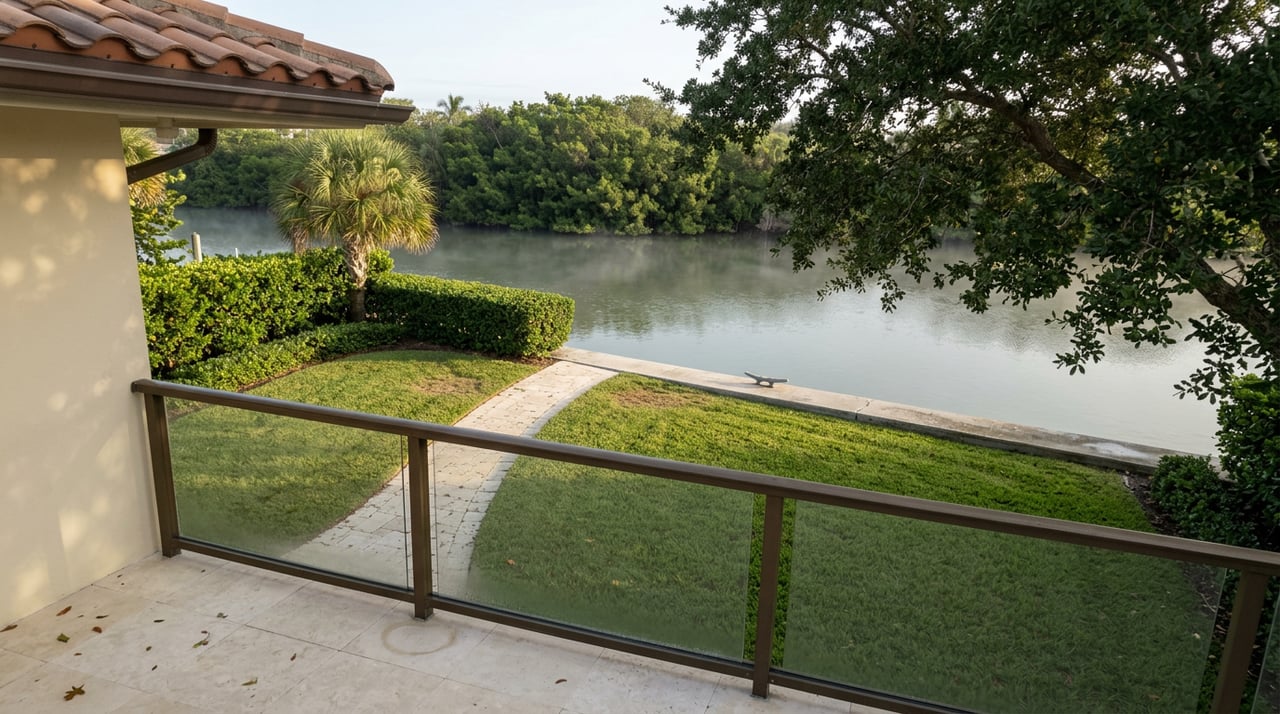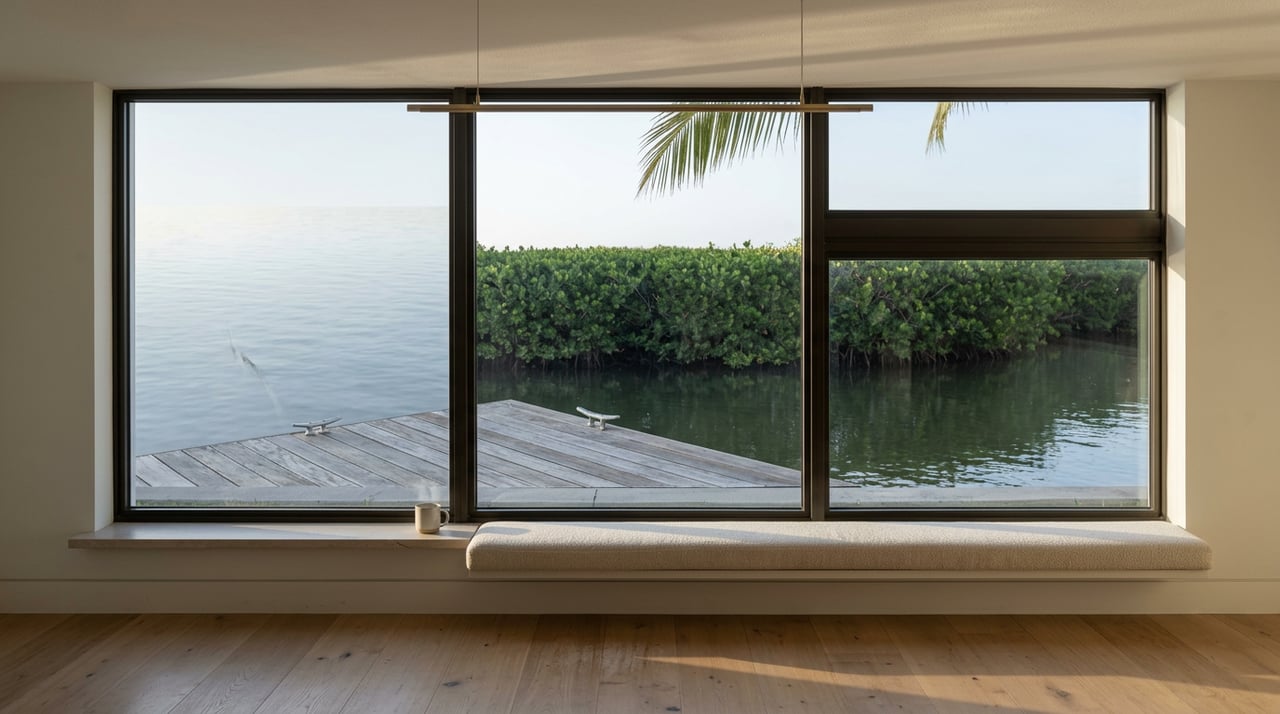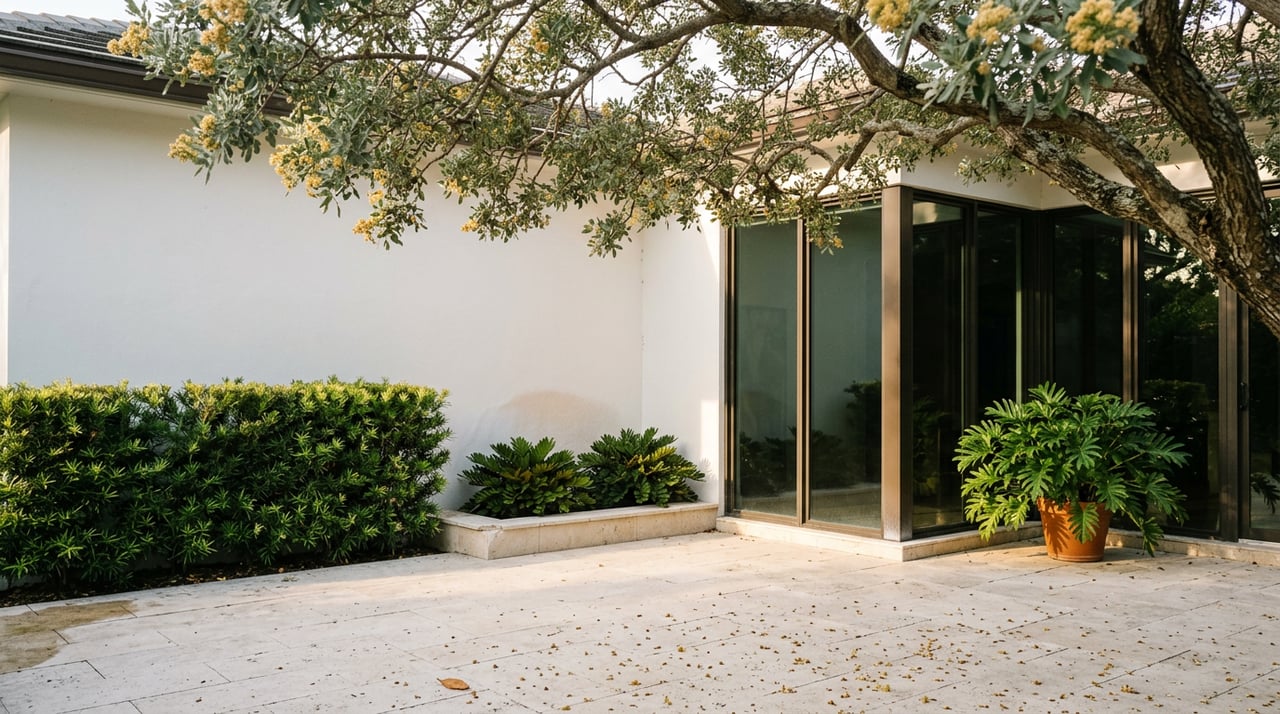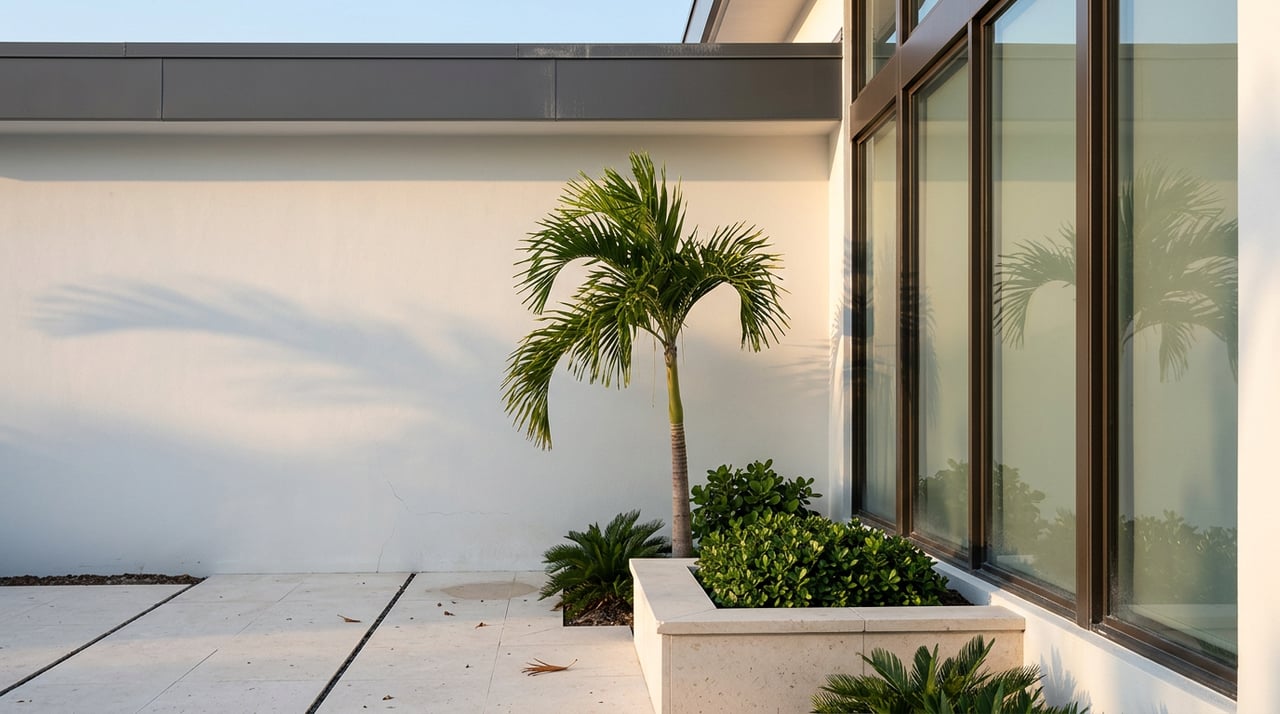
A Lighthouse Point waterfront listing used to sell on the view. In 2026 it sells on the file folder.
The city has roughly 18 miles of waterways, is more than 95% built out, and sits one short run from the Hillsboro Inlet. Scarcity still supports the premium. What has changed is where that premium gets negotiated. With Altos reporting a median list price of $2,240,000 and a market action index of 32 as of June 25, 2026, and with waterfront single-family supply sitting near 8.5 months against an October 2025 median sale of $2,790,000, buyers are no longer bidding on emotion. They are bidding on documentation.
The thesis, stated plainly
In a cooling market, the waterfront premium is captured or conceded at the inspection table. The seller who arrives with permits, elevation data, and a clean seawall report keeps the number on the listing sheet. The seller who arrives without them writes a credit at closing.
Every section below is a piece of that file.
Start with what the city can actually penalize
Dock and seawall improvements in Lighthouse Point are regulated structures, not landscaping. The city has stated that dock and seawall repairs generally require building permits, and that work started without one can trigger a stop-work order and double fees. That is not a footnote. It is the reason buyers now ask for the permit history before they ask for the survey.
Two documents remove most of the friction:
- A pull of the permit history from the City of Lighthouse Point's SmartGov portal, showing final inspections for the dock, lift, and seawall.
- An updated dock or seawall survey, which the city's own checklist notes may be required before final inspection on new work.
If the file shows unpermitted improvements from a prior owner, discovering that in July gives you options. Discovering it during a buyer's due diligence in October gives the buyer a discount.
The document set, in the order buyers ask for it
| Item | Why the buyer wants it |
|---|---|
| SmartGov permit history for dock, lift, and seawall | Confirms nothing was built or repaired outside the code |
| Seawall inspection with age, material, and top-of-wall elevation in NAVD88 | Establishes remaining life and whether a raise to the 5.0 ft NAVD88 reference is looming |
| Elevation Certificate | Drives NFIP Risk Rating 2.0 flood pricing and lender comfort |
| FDEP Letter of Consent or sovereign-lands lease, if the dock extends over state bottom | Confirms the structure is authorized where it sits |
| USACE Section 10 or 404 authorization, if applicable | Applies where work has affected navigable waters or submerged lands |
| Dock and lift as-builts, piling layout, and lift capacity | Lets the buyer's captain confirm the vessel will actually fit |
| Depth soundings at the seawall at mean low water | Answers the question a survey does not: does my boat float here at the wrong tide |
| Roof, impact-opening, and hurricane mitigation permits | Insurance credits that a buyer's carrier will price in |
The buyer's agent will ask for all of it. The only variable is whether you produce it in one email or across six weeks of back-and-forth.
The ocean-access claim needs translation
"Ocean access" is the phrase every waterfront listing uses. In Lighthouse Point it is a technical claim that a diligent buyer will verify. Two properties on the same canal can deliver very different boating usability depending on the route to the Hillsboro Inlet, the fixed-bridge clearances along it, and the depth near the seawall at mean low water. The Hillsboro A1A bridge has an approximate 13 ft closed clearance, which quietly disqualifies a class of vessels that a listing photograph will not.
For a seller, the takeaway is not to soften the claim. It is to prove it. A one-page route memo with bridge names, clearances at mean low water, and typical run time to the inlet does more for a $3M listing than another drone shot. It converts a marketing phrase into a verifiable feature.
What the seawall number actually means
Broward County's coastal resilience planning has pushed seawall standards upward, and Lighthouse Point work now commonly references raising the top of wall to 5.0 ft NAVD88. Whether your wall meets that mark, and whether the city has issued any order to raise it, is a material fact.
Three practical scenarios:
- Wall is at or above the current reference and permits are on file. Lead with it in the listing remarks. Include the inspection report in the pre-market packet.
- Wall is functional but below the reference, with no city order outstanding. Get two contractor estimates for a future raise. Buyers price uncertainty higher than a written number.
- Wall shows movement, scour, or cracking. Address it before listing or price it in explicitly. A failing seawall is one of the few conditions that can complicate both financing and insurance, and buyers now know it.
Why the market has shifted leverage
Redfin has characterized Lighthouse Point as not very competitive, with homes selling below list price on average and longer days on market than the prior year. Altos's June 25, 2026 read of 95 units of inventory and a market action index of 32 sits in the same zone. On the waterfront single-family side, the October 2025 report cited by MILLION Luxury put the median at $2,790,000, up 23% year over year, but paired with 8.5 months of supply.
Those two numbers together tell the whole story. Prices are firm at the top because deep-water inventory is genuinely scarce. Absorption is slow because buyers at this price point have time. Time is what allows a buyer to run inspections, pull permits, request an elevation certificate, and negotiate around what those documents show. Sellers who supply the file up front remove that leverage. Sellers who wait for the request grant it.
The pre-listing sequence that pays for itself
A tight order of operations, done in the four to eight weeks before going live:
- Pull the SmartGov permit history yourself and reconcile it against every visible improvement.
- Commission a professional seawall inspection with a written statement of remaining life and, if relevant, an estimate to raise to current standards.
- Order or update the Elevation Certificate.
- Have a marine contractor confirm lift capacity, cable and roller condition, and electrical GFCI status.
- Assemble insurance documents: current wind, flood, and any mitigation credits already earned through impact openings or roof upgrades.
- Commission a short route memo covering bridges, mean-low-water clearances, and typical run time to the Hillsboro Inlet.
- If any improvement lacks a permit, resolve it through the city before it becomes a buyer's negotiating point.
Every item on that list reduces the surface area for a price concession later.
Short FAQ
Do docks and seawalls transfer with the property? They typically do unless specifically excluded in the contract. Confirm the treatment on the survey and in the purchase agreement, and confirm responsibility for maintenance through title and any recorded easements.
If a prior owner did unpermitted work, can I sell as-is? You can, but the buyer's lender, insurer, and inspector will each see the gap. Resolving it through the city's permitting process is almost always cheaper than the credit a buyer will request when their inspector flags it.
Is a boat-in showing worth the trouble? For deeper-draft or taller-air-draft vessels, yes. A live run from the dock to the inlet at or near low tide converts the ocean-access claim from a paragraph into a memory. Buyers who have made that run rarely reopen the route question later.
Does the softer market mean I should price below recent comps? Not necessarily. Waterfront single-family comps in Lighthouse Point are thin, and route quality, dock capacity, and seawall condition can justify wide spreads between homes on the same canal. Price to the file you can prove, not to the median.
If you are planning a Lighthouse Point sale in the next twelve months, the paper trail is the listing. Levinson Luxury Group prepares the documentation, positioning, and route diligence that let a waterfront home sell on its own merits rather than on a buyer's inspection list. Get access to our private listings and our pre-market advisory to see how a well-documented file changes the conversation.