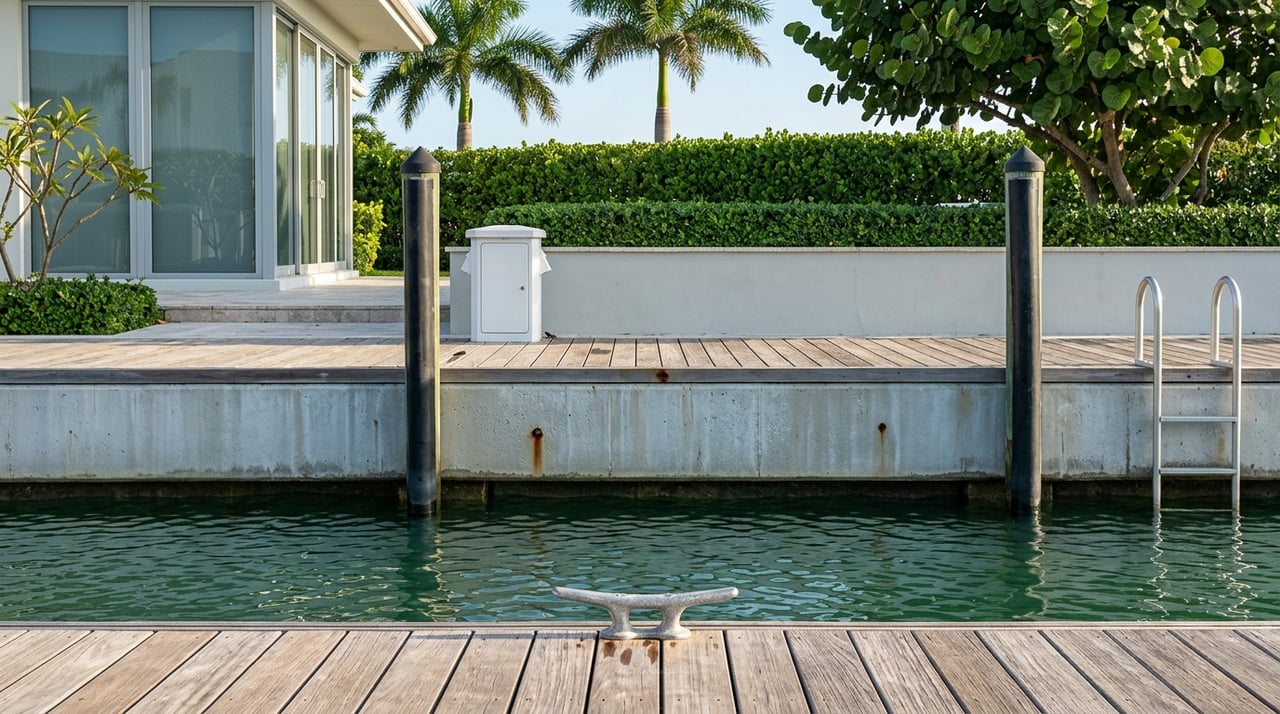
If your perfect morning starts with lines off from your own backyard dock and a short run to open water, Lighthouse Point should be on your shortlist. Choosing the right waterfront estate here is about more than “ocean access.” Draft, canal depth, bridge clearance, dock rules, and service options all shape how you will actually use your boat. In this guide, you’ll get a clear, boater-first look at Lighthouse Point’s canals, inlet access, dock configurations, marina network, and the due diligence that matters before you buy. Let’s dive in.
Why Lighthouse Point works for boaters
Lighthouse Point delivers a private, low-rise boating lifestyle with engineered canals, bulkheaded lots, and direct connections to the Intracoastal Waterway. The city’s planning documents describe a built-out, canalized waterfront with concrete seawalls and a focus on canal maintenance and flood-zone management. That structure supports a true backyard-dock experience for many single-family estates. You get water at your back door, with support services nearby when you need them.
Canal network and seawalls
The canals here are man-made and bulkheaded, not natural creeks. The city’s Comprehensive Plan highlights the engineered nature of these waterways and the importance of seawall conditions, canal upkeep, and flood exposure. In practice, your boat’s usability depends on canal geometry, turning room, and the condition of the bulkhead that defines your dock line. You will want to assess each of those on any property you consider. City of Lighthouse Point Comprehensive Plan
Inlet access and run times
One of Lighthouse Point’s biggest draws is how close it sits to the Hillsboro Inlet. Many marina and community descriptions emphasize “minutes to the inlet,” with common real-world runs often quoted in single digits depending on your route and boat speed. Your experience will vary by location and vessel, so treat any time claim as an estimate and verify it on the water. For context on local facilities and proximity, review the Lighthouse Point Yacht & Racquet Club marina profile.
Depth, shoaling, and dredging
Depth is a practical limiter. Local marina listings in the Lighthouse Point corridor often report around 6 to 7 feet at mean low water at the docks, while the federal Intracoastal channel in the area is maintained to deeper target depths by periodic dredging. The inlet operates under a separate management program and can shoal seasonally. Always confirm usable draft at mean low water for your specific dock and route to the inlet, since conditions and maintenance cycles change. For regional maintenance context, see the U.S. Army Corps notice on Intracoastal Waterway maintenance dredging.
Bridge clearance
Route clearance varies across South Florida. Many Lighthouse Point routes to the inlet avoid fixed bridges, but every vessel and path is different. If you have a taller profile or a mast, verify the exact dock-to-inlet route for your property, including any opening bridge schedules along longer runs. Make bridge planning part of your pre-offer due diligence, especially if you are new to the corridor.
Lots, frontage, and what your boat can fit
Estate and canal lots come in a range of shapes and sizes. In Lighthouse Point, many single-family canal parcels are marketed with roughly 60 to 120 feet of waterfront, while point lots or larger estates can offer substantially more. The lot shape and canal width determine how much usable dockage you truly have. A wide basin or point lot can improve maneuverability and give you more flexibility on vessel length.
Dock types and vessel sizes
Private docks along these canals often feature boat lifts sized for mid to large recreational boats. Local marinas list wet slip capacities that commonly top out in the 50 to 80 foot range, while much larger yachts typically berth or service in Fort Lauderdale’s big-yacht facilities. If you plan to keep a 60 to 80 foot vessel at home, confirm three things before you commit: usable dock length for your LOA, depth at mean low water, and turning room at the canal mouth. For a sense of local service capacity, review PORT 32 Lighthouse Point Marina and its wet-slip offerings.
Plan around local dock rules
Dock and piling construction is regulated by city ordinance. Key limits include how far a dock may project from the seawall and how wide the dock can be based on canal width. As a summary, docks on canals are typically limited to 8 feet of projection from the landward edge of the seawall, or up to 10 feet on canals that are at least 100 feet wide. Dock width is generally capped at 6 feet on narrower canals and 8 feet on wider ones. Pilings and dolphins have number and placement limits, and owners must obtain all applicable state and federal permits for in‑water work. Read the local standards before you design a lift or dock plan. City ordinance on docks, piers, and pilings
Marinas, yacht clubs, and service ecosystem
Lighthouse Point blends private backyard dockage with a convenient support network for fueling, pump-outs, and social programming. This mix suits owners who want their boat at home but still value marina resources minutes away.
Daily needs, social life, and quick access
The Lighthouse Point Yacht Club anchors the local boating culture with club amenities and a marina close to the Intracoastal and inlet. Nearby, PORT 32 operates a full-service marina with wet slips, fuel, and transient capacity. These facilities provide the services your private dock cannot, from fuel and pump-outs to short-term dockage for guests. Explore Lighthouse Point Yacht Club and PORT 32 Lighthouse Point Marina for offerings and current slip information.
Big jobs in Fort Lauderdale
For haulouts, refits, and larger-yacht services, most owners look to Fort Lauderdale’s marine infrastructure. Facilities along the New River and beach corridor offer deeper technical capacity, higher-amp shore power, and space for very large vessels. Bahia Mar Yachting Center is a recognizable hub in this network and a useful regional reference point for transient services and events. Bahia Mar Yachting Center overview
How Lighthouse Point compares
- Lighthouse Point: Private backyard dockage, quick inlet runs, and an intimate, low-rise waterfront fabric.
- Fort Lauderdale: Larger slip inventory and superyacht-oriented yards for heavy maintenance and major transient traffic.
- Boca Raton: Club-forward boating culture and upscale estates with different inlet dynamics and marina footprints.
Choose based on how you actually use your boat. If frequent ocean runs and at-home dockage top your list, Lighthouse Point aligns well.
Risks, permits, and insurance
Every waterfront market has rules and risks. Lighthouse Point is no exception. Planning ahead will help you protect your investment and ensure your boat lives well at your dock.
Who permits what
Waterfront construction and modifications can trigger multiple approvals. Expect to work with the City of Lighthouse Point for zoning and building permits, and with Broward County, the Florida Department of Environmental Protection, and the U.S. Army Corps of Engineers for work affecting submerged lands or navigable waters. The city ordinance explicitly requires owners to secure all applicable state and federal permits for pilings and dolphins. Dock and piling ordinance | USACE Regulatory Public Notices
Seawalls and dredging responsibilities
The city’s planning documents note ongoing canal maintenance needs and flood-zone exposure across parts of Lighthouse Point. Homeowners are typically responsible for maintaining their own seawalls and docks. Public channels and the Intracoastal benefit from periodic maintenance dredging under state and federal programs, which can shift over time with budgets and contracts. Confirm who handles dredging in any canal that serves your dock. Comprehensive Plan reference | USACE maintenance dredging context
Flood, storm, and insurance
Large portions of Lighthouse Point fall within FEMA flood zones. The city’s plan acknowledges 100-year flood exposure that influences building thresholds, seawall elevation choices, and insurance availability. Ask for the property’s current FIRM designation, recent seawall and dock evaluations, and any post-storm repair history. Confirm flood, windstorm, and marine liability coverage options early in your process. City planning document
Buyer due diligence checklist
Use this quick list before you make an offer on any Lighthouse Point waterfront estate:
- Verify dock allowances and setbacks under the city ordinance, including maximum dock projection and width on your canal. Dock and piling ordinance
- Order a current depth survey with soundings at mean low water for your dock and route to the inlet. Cross-check with local marina depth references. Local marina profile
- Confirm practical LOA and turning room based on frontage, canal width, and the shape of the lot. Point lots often offer better maneuvering.
- Request copies of permits and as-built drawings for the seawall, dock, and any lifts. Review state and federal permit records for the parcel. USACE Public Notices
- Ask about recent dredging or known shoaling near your canal mouth. Check with local marinas or county marine patrol for current advisories. Intracoastal maintenance dredging reference
- Confirm insurance options and expected costs for flood, wind, and your vessel. City planning document
Ready to explore Lighthouse Point waterfronts?
If you want a backyard dock lifestyle with short, practical runs to the ocean, Lighthouse Point delivers. The key is aligning the property’s canal, dock envelope, and depth with your vessel and plans. When you are ready for a curated shortlist of on and off-market options, confidential guidance, and data-driven due diligence, connect with Barry Levinson for boutique representation backed by Compass marketing and private-network reach.
FAQs
How close is Lighthouse Point to the Hillsboro Inlet?
- Many routes are just minutes from the inlet, often a short run depending on location and boat speed, so confirm time on the water for the specific property you are considering. Local marina context
What draft can I expect at local docks and marinas?
- Local marina listings commonly cite about 6 to 7 feet at mean low water at their docks, while the Intracoastal channel is maintained deeper through periodic dredging. Always verify depth for your specific berth. USACE maintenance note
Are there fixed bridges between Lighthouse Point canals and the ocean?
- Some routes avoid fixed bridges, but clearance varies by path and vessel. If you have a tall profile or mast, verify bridge clearances for your exact dock-to-inlet route before you buy.
What are the main dock and piling rules in Lighthouse Point?
- Docks typically may project up to 8 feet from the seawall, or 10 feet on canals 100 feet wide or more, with width limits based on canal width and specific piling standards and permits required. City ordinance
Who handles dredging and canal maintenance near my property?
- Homeowners usually maintain their own seawalls and docks, while public channels and the Intracoastal rely on periodic dredging by state and federal programs. Confirm responsibilities for your canal. City planning reference
Where do I go for large-yacht services or haulouts?
- For heavy maintenance, most owners use Fort Lauderdale’s marine network, including major marinas and shipyards, while using Lighthouse Point marinas for day-to-day needs. Bahia Mar overview